My Blog:
-I will continue filming the brickfilm I am creating and post it on my blog by the end of winter break
-Also, I will start researching what I have decided will be my new topic (specific to animations) which is the impact and influence of sound effects on animations (which means I will probably watch a lot of Tom and Jerry...)
School Improvement:
-I will research more information regarding how solar panels work
-I will check Shannon's blog periodically to see which company she has decided will provide the best deal and maybe cauculate the tentative cost of all the panels
Group Project:
-By the end of winter break and when school begins, I will have new brainstorms of possible group projects that will be INNOVATIVE and out of the box (or "pushing the envelope") that I will bring to school when I get back to critique it and strip it to its' bare bones
Friday, December 21, 2012

Wednesday, December 19, 2012
A Collection of Data Gathered- Stop Motion Part 3
Now, for a bit of background knowledge on stop-motion animation that probably would have been useful about two paragraphs earlier...from what I've discovered about stop-motion animation, it's actually really similar to the way that I make my digital animations because I do mine frame by frame. How stop-motion works is that the animator will first have to create his "actors" and "actresses" and props and sets. Typically they are made of clay and then painted to add details. Also, puppets and dolls can be taken to make stop-motion animations. Another style of stop-motion animations that has become somewhat popular lately are "Brickfilms". Brickfilms are basically stop-motion animations done with LEGO pieces. Stop-motions are also done with the idea of frame-by-frame. The animator will lay out all the pieces that are in the first scene and take a photograph of it. Then he will move the pieces into their actions; very slowly, and steadily, not to skip any or move other pieces that do not need to be moved. And every time a piece is adjusted or moved even the slightest bit, take another picture. When you put all the pictures onto a program like, maybe...Windows Movie Maker, they will give the viewer the illusion that these shapes and pieces are actually moving! Stop-motion animation is also not just used by the directors/producers of animated films, but also action films like Jurassic Park, King Kong, Clash of the Titans (the older one), and even Star Wars! Before there were those green dots that you could put on actors and actresses so that you could digitally make them into beasts and monsters, the directors and producers incorporated the art of stop-motion animation into their movies by creating the creatures out of clay and putting them right into the film!
The link to "The Dandelion," an amazing brickfilm abut a man taking ridiculously DESPERATE measures to destroy the single dandelion that ruins his immaculate lawn (and not to mention, annoys the crap out of him with it's shenanigans): www.youtube.com/watch?v=XwhmrJkDJiY


-A scene from the Dandelion (a brickfilm)

-Two clay models of Gromit that appear to be exact duplicates (but if you look closely, you'll note that they are actually looking in different directions)
A Collection of Data Gathered- Stop Motion Part 2
Back on topic then. While many directors/producers/animators choose to create their animated films using digital animation and programs and such, there are still directors/producers/ animators out there who still like creating movies with stop-motion. One of which (one of my personal favorites) is Tim Burton (pictured below holding a skeleton). He is responsible for many famous and popular films like "The Nightmare Before Christmas," which is watched often, as it is nearing Christmas. He feels that, "There is an energy with stop-motion animation that you can't describe. It's got to do with giving things life, and I guess that's why I wanted to get into animation originally. To give life to something that doesn't have it is cool, and even more so in three dimensions, because, at least for me, if feels more real. With the large Marge thing or dinosaur–any time we could throw in some stop-motion, the better."


Tuesday, December 11, 2012
Individual Blog-Check ins!
How has your knowledge evolved this semester?
Yes: I have learned the fundamentals about stop-motion animations and have begun to create my own. I have learned that stop-motions are basically made of clay models or puppets or Legos or other forms of 3 dimensional materials that are then painted or decorated to make more detailed. They have been used in many types of movies, but mainly forms of cartoons. Back when green screens and green dots had not been discovered to alter people's appearances into grotesque creatures and monsters, directors and producers used stop-motion animation. I mean, look at King Kong...the dinosaurs in Jurassic Park...the AT-AT Walkers on Hoth in Star Wars Episode V: The Empire Strikes Back. All were many, many times smaller in real life than they were in the actual films. They were made out of clay and other materials, then painted and decorated to looks extremely realistic, then incorporated into their movies. (Or, the sets were done as stop-motions and the actors and actresses were incorporated in.)
What research has informed your now deeper understanding of your topic?
I have read the good majority of my book, A Century of Stop Motion Animation, by Ray Harryhausen from which I learned the majority of what I learned. Also, I have watched a few Brickfilms on YouTube so that I can see what the end product should be because right now my current project is 'filming'...or putting together a Brickfilm myself.
Where do you plan to go with your research in the coming days? Weeks? Months? Years?
*You should be able to articulate what you don't know and how you plan to fill that knowledge
void.
I plan to continue on and finish filming and putting together my own brickfilm and then posting it on this blog and/ or even posting it on YouTube to see if I can receive any feedback.
Below: A few pictures from my brickfilm in progress


Yes: I have learned the fundamentals about stop-motion animations and have begun to create my own. I have learned that stop-motions are basically made of clay models or puppets or Legos or other forms of 3 dimensional materials that are then painted or decorated to make more detailed. They have been used in many types of movies, but mainly forms of cartoons. Back when green screens and green dots had not been discovered to alter people's appearances into grotesque creatures and monsters, directors and producers used stop-motion animation. I mean, look at King Kong...the dinosaurs in Jurassic Park...the AT-AT Walkers on Hoth in Star Wars Episode V: The Empire Strikes Back. All were many, many times smaller in real life than they were in the actual films. They were made out of clay and other materials, then painted and decorated to looks extremely realistic, then incorporated into their movies. (Or, the sets were done as stop-motions and the actors and actresses were incorporated in.)
What research has informed your now deeper understanding of your topic?
I have read the good majority of my book, A Century of Stop Motion Animation, by Ray Harryhausen from which I learned the majority of what I learned. Also, I have watched a few Brickfilms on YouTube so that I can see what the end product should be because right now my current project is 'filming'...or putting together a Brickfilm myself.
Where do you plan to go with your research in the coming days? Weeks? Months? Years?
*You should be able to articulate what you don't know and how you plan to fill that knowledge
void.
I plan to continue on and finish filming and putting together my own brickfilm and then posting it on this blog and/ or even posting it on YouTube to see if I can receive any feedback.
Below: A few pictures from my brickfilm in progress
Monday, December 10, 2012
A Collection of Data Gathered- Stop Motion Part 1
So right now I have been focusing on one specific type of animating: stop-motion animations. Currently, right now, I feel that stop-motion animation is not being used as often as it was when it first came out because of the discovery of digital animation. I bet that most producers/ directors/ animators are leaning more towards digital animation because it requires less time and less effort and looks very professional. Now I'm not saying that stop-motion is bad...or that it is a waste of time and effort. Personally, I have a hard time deciding which I prefer of the two because digital animation is really very smooth and looks very professional, but it doesn't show the rough edges and mistakes as much as stop-motion does. Yes...I know what you're probably thinking right now...why would someone want to show their mistakes? Doesn't make sense to me...and you would be correct. I honestly do not like showing my mistakes in my work, but to quote the words of Peter Lord of Aardman Animations, "Stop-frame is like live music, played on traditional instruments, compared to studio recording using the finest instruments in the world, all the latest technology and some electronic instruments. The latter is more polished, more perfect, bigger, better, showier–but maybe lacks humanity. Stop-frame is much less perfect, mush less polished, unrepeatable, inaccurate–in a word, human. It all depends on whether the audience care or not about humanity." I agree with Mr. Lord. I feel that stop-animation reflects more of the animator's efforts, his time spent on perfecting and creating each piece of the set to the best of his ability. In saying this, I am not saying that digital animation reflects the animators laziness, his unwillingness to want to create his pieces by hand, because it doesn't. It takes extreme amounts of effort, hours and hours of one's time...I've experienced it firsthand. But comparing stop-motion to digital animation would be like comparing a human to a robot/ a cyborg. Humans flaws show that they are human. If a robot had a flaw, then a scientist could just fix it. (okay, now I'm really off topic here...)


-A picture of Peter Lord of Aardman Animations
Friday, November 2, 2012
TASK
2nd Quarter task:
The Problem -You will identify an environmental or logistical problem within the school that your group will attempt to solve/provide an alternate procedural model
-IMPACT: who is most affected by the problem? How does this adversely affect the daily school environment?
-Project Presentations--First Semester Final Exam Time
-EX: iPizzle (ipad) Problem: Paper consumption
RUBRIC
-Identification of environmental issue or school problem: and research (10%) of total score)-how well does the project describe the negative effects of the environmental issue or school problem with global implications? does the project describe the environment and/or people impacted? did the team research the issue/problem thoroughly through a variety of sources?
-state hypothesis: (5% of total score)- Has a hypothesis that is measurable and demonstrates creative thinking been developed
-Plan and design: (25% of total score)- does the project thoughtfully develop and clearly articulate its plan, including project steps, timeline for completion, necessary resources, proposed methodology, anticipated results, and data collection? did the team exhibit originality in planning and designing the projects including selection of variables and use of processes and materials that are eco-friendly or sustainable and/or relevant? Are the roles of team members, Team Advisor/Mentor and others clearly defined? Did all team members participate in all aspects of the project?
-Analyze and provide Results: (20% of total score)- How well does the project describe and analyze quantitative and qualitative data and reference how the hypothesis impacted the problem?
-CONCLUSION: (20% of total score)- How well does the project describe what was learned and the impact, if any, on the problem statement? Was the solution innovative? how well does the project describe the project results and challenges?
-SHARE IT: (15% of total score)- how did the team inform others of the issue/problem? did others become involved? were findings communicated creatively? how well did the team recommend how other communities might benefit from the solution, including potential challenges?
-GLOBAL IMPACT: (5% of total score) -How well does the project describe the global implications and how to implement globally?

Monday, October 22, 2012
Book
I have finished my book, The Art of Up. It is mostly made up of pictures so I feel like I will need to get a better book because it mostly only consists of information specifically on the designs of Up. I have ordered another book on stop motion animation (which is, I think, the way that I am creating my animations).

Contact
Last week, I emailed Pixar studios but now I feel that that was a sort of crazy idea because, as I found out and should have suspected, they receive too many emails to be able to respond to each and every one of them.
So now, I am searching for another person/ group of people to contact.
So now, I am searching for another person/ group of people to contact.
Wednesday, October 17, 2012
Arthur :D
So, lately i've been watching Arthur. It brings back so many memories... :')

ANIMATED EDUCATIONAL SHOWS
Main Audience: Young kids and children
Why: It is appealing and attractive in its' colorful colors and gentle/ playful fun and happy
positiveness
Factors: -Characters:
_Attractive
_Relatable
_Original
_Friendly
_Unique
_Funny
_Memorable
-Plot
_The plot should be something easy for kids to relate to
MORE INFORMATIONAL: More visuals, less writing (more speaking if possible...) --> easier
for young, young children to comprehend
General: Types=
-Entertaining (pure amusement that's extremely unrealistic; impossible, no real
advantageous or useful information provided
-Educational (teaches kids, be it how to socialize, or nonfiction)
Why? Because...
-They are a good way for adults to occupy their children while they are trying to get work done
-It teaches them, even if it's not ENTIRELY educational because it teaches about life issues
like:
_Respect
_Bullying
_Integrity
_Responsibilities
_Friendship
_And More!
Tuesday, October 16, 2012
Outliers Whole Book Review part 2
In the chapter titled, "The Three Life Lessons of Joe Flom," it is said that "Those three things--autonomy, complexity, and a connection between the effort and reward--are, most people agree, the three qualities that work has to have if it is to be satisfying." That last part, "...the connection between effort and reward," is probably, at least in my opinion, of of the most meaningful phrases in the whole book. This is because it demonstrates pride. Now, i'm not saying that I am extremely self-obsessed, and that I need EVERYTHING to be PERFECT (even though I do admit I can be a perfectionist sometimes). I am just saying that in order to be satisfied with what work one has done, they need to have that connection between their efforts and the reward. Take me for example; I am a MAJOR procrastinator and wait until the LAST POSSIBLE DAY to accomplish everything. But I do say that even though I am doing it in a shorter amount of time (and maybe under more pressure) I still do a good job on it. I will SERIOUSLY stay up until 1:00 a.m to finish a project or assignment, and I have done that. But that's only because I am trying my very hardest at it. I probably could have finished it in half the time, but I kept fixing things and trying to make it better. And by the time I have finished it, I know that I will be able go to sleep feeling very accomplished. This would be the EXTREME amount of effort that I am putting in. On the other side, the reward, I would have to say that I would not be receiving AS MUCH because of my still being a student and that just about every piece of work I accomplish is for the sake of my own education. So, in a way, i am being rewarded through what I have learned. But also, if one is a student (such as myself), they are also rewarded with a grade to basically act as proof of their hard work and effort.

Tuesday, October 9, 2012
Outliers Whole Book Review part 1
- In the chapter, Rice Paddies and Math Tests, I think that if someone who doesn't speak chinese reads this chapter, they won't really understand that numbers are literaly means "two ten one".
- In the chapter, Marita's Bargain, I think that Mr. Gladwell is trying to say that even if someone is born and raised in a poorer area (like Marita), they are still able to acheive what the kids in public schools (us) if they are just given the chance to do it

Tuesday, October 2, 2012
Outliers
In class, our first response question to Outliers was:
10,000 hours =
417 total days.
at hours/day of dedicated practice/ concentration you would have reached 10,000 hours if you had practiced one thing every day since birth.
What thing have you spent the most time doing in your life to this point? How much time have you spent doing this thing? Are you still actively pursuing this thing?
As a response, I think the one thing I spent the most time doing in my free time would be making and editing powerpoint presentations. I usually spend what time I have when I don’t need to do homework or work on something for my mom or dad. One summer, when I truly discovered it, I must have spent at least half or more of my summer on making my powerpoint. After that point, though, I began doing it less because I started school again and even less in junior high. I am still pursuing this because sometimes in school, I will make another one (and improve my skills) for a school project.
10,000 hours =
417 total days.
at hours/day of dedicated practice/ concentration you would have reached 10,000 hours if you had practiced one thing every day since birth.
What thing have you spent the most time doing in your life to this point? How much time have you spent doing this thing? Are you still actively pursuing this thing?
As a response, I think the one thing I spent the most time doing in my free time would be making and editing powerpoint presentations. I usually spend what time I have when I don’t need to do homework or work on something for my mom or dad. One summer, when I truly discovered it, I must have spent at least half or more of my summer on making my powerpoint. After that point, though, I began doing it less because I started school again and even less in junior high. I am still pursuing this because sometimes in school, I will make another one (and improve my skills) for a school project.
Monday, September 24, 2012
Creating Shapes: The Basics-Intro
Now, you might be thinking this, but you also might not. Where in the world did I get such awesome shapes on PowerPoint (like the sheep and goats in Anthrax? Well, to be honest, it's actually not that hard. I figured this out before having read my book (and with some indirect aid from my brother). What I realized is that PowerPoint gives you the most basic shapes like squares, circles, and triangles (and even with these, you can still play with their dimensions). Using these shapes, one is able to "play" with them and then COMBINE THEM to create other shapes. Over the next few weeks (beginning 25th of September) I will try to teach you, my bloggish viewers (and Mrs. Sheehan and Mr. Leathem) how to create more exciting shapes with the given shapes and how to use the "bring to front" and "send to back" buttons, the "group" button, and others. This series will be titled "Creating Shapes: The Basics" so if you miss a day, you can find more easily. *Also, every week, I will try to remember to include an "Animating TIP of the WHENEVER-I-REMEMBER-TO-POST-IT!" These will consist of easy and extremely helpful "tools" of trade! These I will post whenever I have time, or whenever I remember.*
Anthrax
Now this next PowerPoint that I'm posting is about Anthrax (title, duh...). I made this one as a group project, but, to be honest, my partner didn't exactly contribute too much...well, actually, at all. This one is not exactly a full animation yet, but it is still more of one than Qian (the Anaconda Strategy).
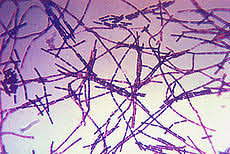
-BACILLUS ANTHRACIS
-BACILLUS ANTHRACIS
Qian (the Anaconda Strategy)
Alright now, people. This is NOT the first ever PowerPoint that I created. It is also NOT in animation form. BUT, I'm posting it because it was the first PowerPoint in which I realized that I could be creative and that it didn't always have to be so bland and boring and still present and idea at the same time.

-Above is the layout of the Anaconda Strategy proposed by General Winfield Scott during the Civil War to subdue the seceding states
Don't know too much
I don't really know too much about animations so far, but I understand the concept of frames because that is how I've been doing my animations on PowerPoint so far.

-Frames of a man running
-Frames of a man running
Friday, September 7, 2012
My Mission Statement (at least so far...)
The Mission of BenditaAnimations is to convey ideas and information through animations on powerpoint presentations. Also, I will use animations to entertain my audiences with different personalities and filled with facts and/or humour that will hopefully fit them. I will also teach others ways to use Microsoft PowerPoint instead of only as a plain way of giving people information because Powerpoint can be such a fascinating program to use if one explores and learns how to use it.
Subscribe to:
Comments (Atom)